 GivHome
Local GivEnergy control, refined for Apple Home
Keep your valuable battery energy for your home. GivHome helps protect it from draining into your EV during Octopus smart charging.
Charge your battery on cheap electricity, choose how much charge you want and see what your solar is doing. GivHome takes care of the everyday charging, with you in control from Apple Home.
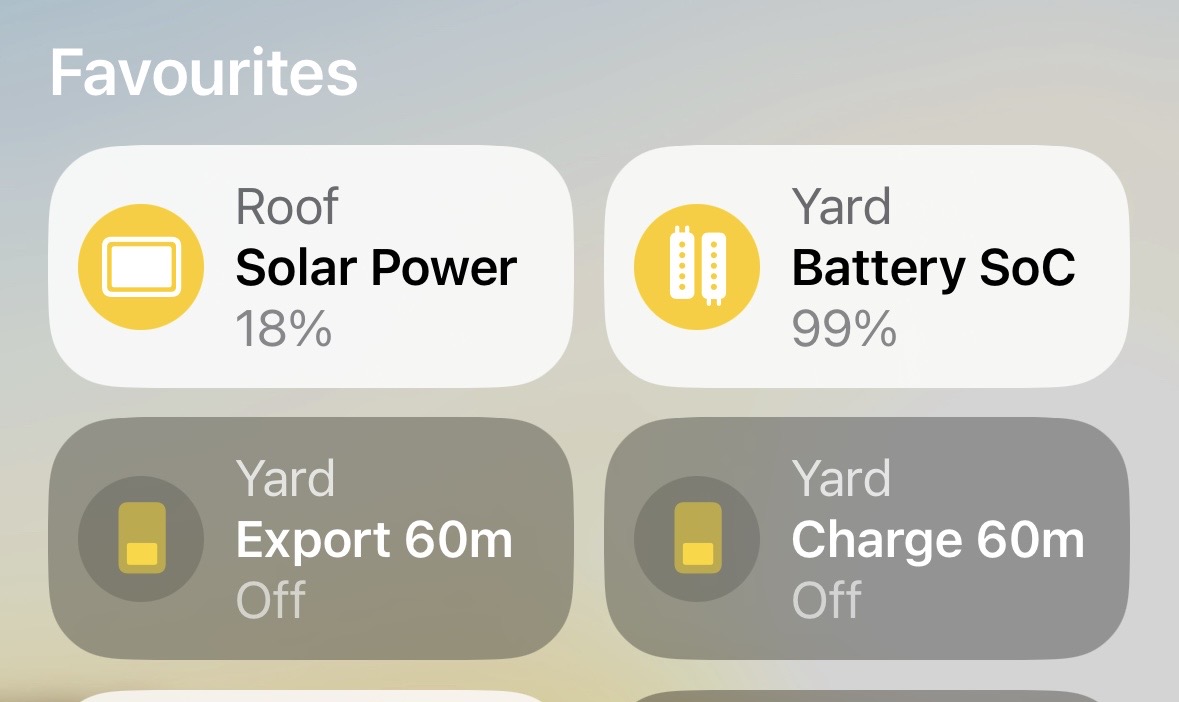
GivHome is a free Homebridge plugin for compatible GivEnergy systems. It brings battery readings and controls into Apple Home and helps protect stored energy during Intelligent Octopus Go smart EV charging.
Protect your battery during Octopus smart EV charging.
Choose your overnight period and charge target. GivHome handles the charging.
Battery, solar, import and export at a glance in Apple Home.
More from your battery. Less to think about.
Keep energy for the house, charge when electricity is cheap and put spare energy to use. Choose what suits your household and let GivHome look after the routine.
See your energy at a glance
GivHome shows battery level, solar generation, import and export together in Apple Home. It gets the readings directly from your inverter over your home network.
Keep your battery energy for the house
GivHome follows Octopus smart EV charging slots and can protect your stored energy while the car charges. That includes extra cheap slots outside your usual overnight period.
Choose the charge that suits your day
Choose your preferred battery percentage in Apple Home. GivHome uses that saved target for overnight charging, timed charging and IOG charge-mode protection.
A little extra charge when you need it
Start a timed charge or export from Apple Home, or pause supported charging and discharging. GivHome checks the inverter and manages when timed actions finish.
Sell spare energy. Keep your reserve.
Optional evening and Flux export plan around the energy you can spare and the reserve you want to keep. Agile Outgoing adds half-hour prices, with a preview before you enable live export.
Plan ahead with tomorrow's solar
Add your solar-panel details and GivHome estimates tomorrow's generation in Apple Home. For what actually happened, look back at solar, import and export history in Eve.
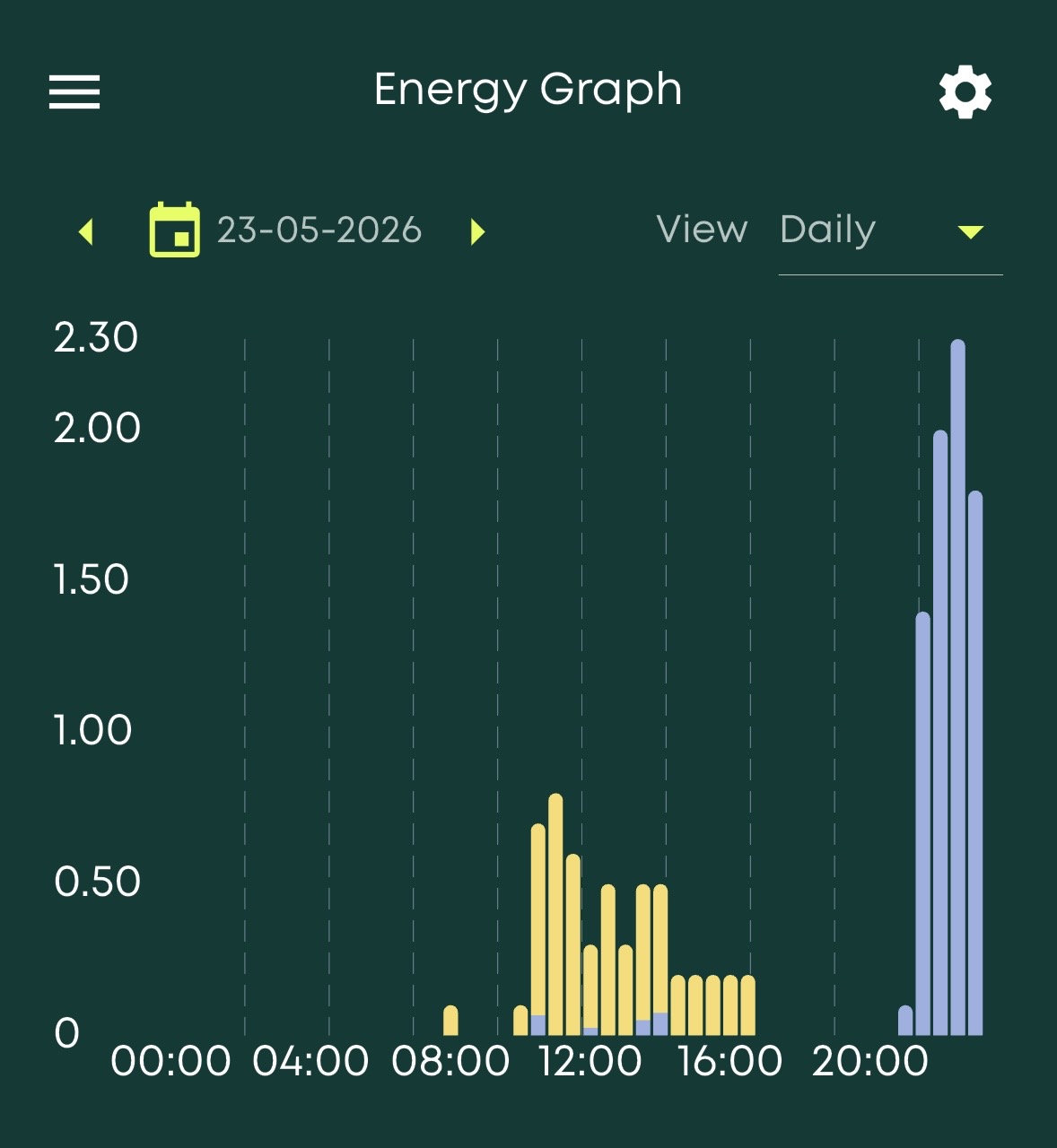
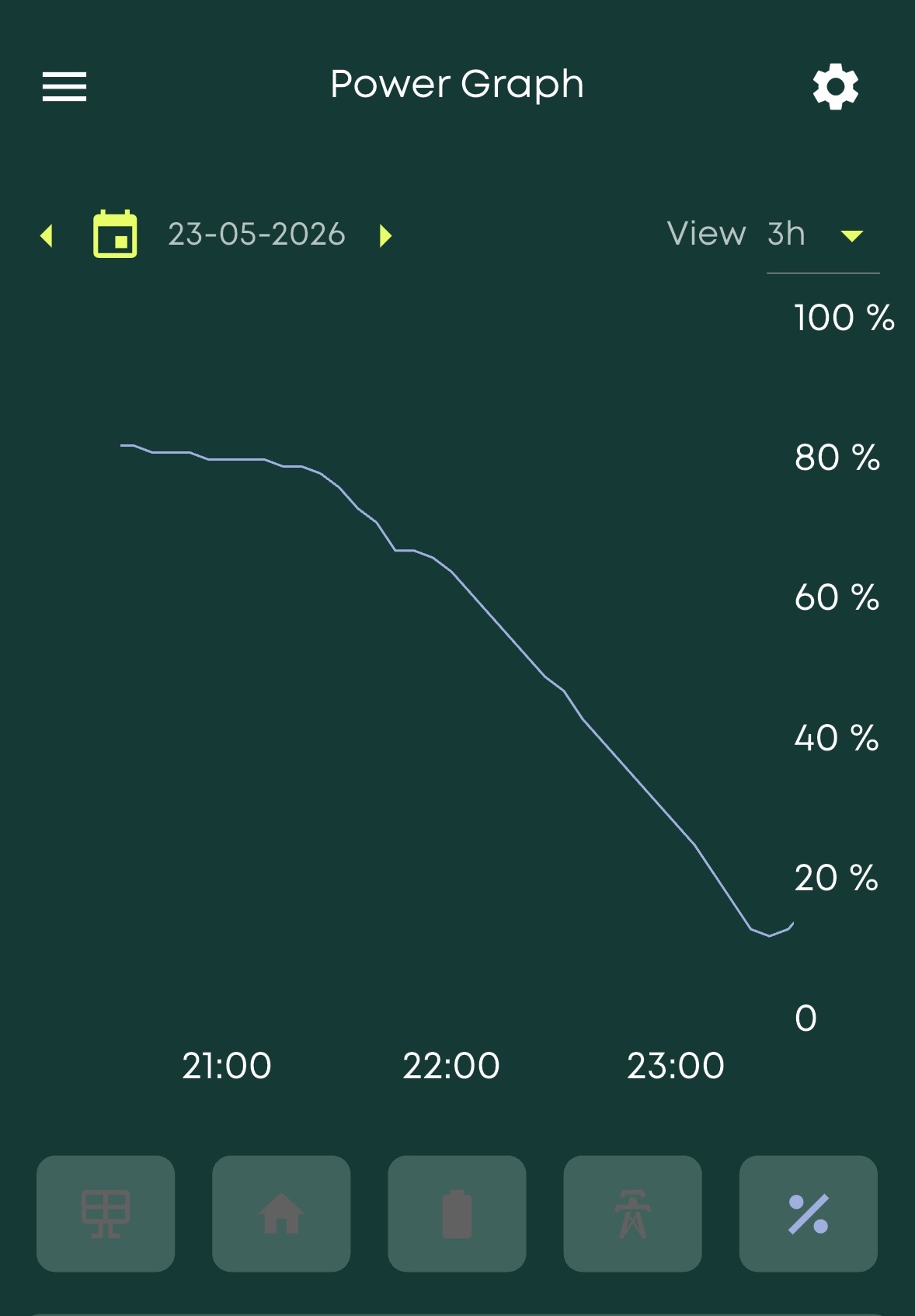
See where your energy went.
The Home app shows what is happening now. Eve gives you the longer view, with solar, import and export history stored locally.
At home on your home network.
GivHome connects directly to your inverter for everyday readings and supported controls. Octopus supplies smart charging times and tariff information; Open-Meteo supplies the weather data for solar forecasts.
Cheap charging. Sensible exporting.
Fill the battery during your cheap period, keep stored energy for the house when the car charges, and export energy you can afford to spare. Choose the options that fit your tariff and household.
Careful with the battery you rely on.
GivHome checks the inverter before supported control actions, verifies important changes and manages the settings used by timed operations. Some inverter models have additional limits: the FAQs explain what to check before relying on automatic charging or export.
Get started with GivHome
Open Plugins in Homebridge, search for GivHome and click Install. Then connect your inverter and pair GivHome with Apple Home.
Free to install. Runs on your Homebridge host.
Detailed setup journey
Install through Homebridge
- Sign in to your Homebridge dashboard and open Plugins.
- Search for GivHome and click Install. Existing users can click Update on the GivHome plugin card.
- Follow any restart prompt and open the GivHome plugin settings.
Configure GivHome
- Enter the local inverter IP address and serial number. The serial is a safety gate: GivHome rejects a responder that does not match.
- Leave the Modbus port at 8899 unless you are deliberately validating another adapter.
- Start with telemetry only. Confirm Apple Home shows sensible battery, solar, import, export and load values.
- Enable timed charge, export, Octopus, Eve history or Predicted Solar features only after the basic telemetry is clean.
Enable the Child Bridge and pair with Apple Home
- On the GivHome card, enable Child Bridge and restart when prompted.
- Return to the plugin card, open the pairing code, then scan the QR code with your iPhone camera or enter the code in Apple Home.
- Once paired, move the new GivHome tiles to the right room and favourite the ones you use often.
Before using live controls
Keep a Homebridge backup and a route back to the previous plugin version. Test charge and export controls while you are at home and able to watch the system.
Good to know
A few useful answers before you get started.
Can I use GivEnergy with Apple Home or HomeKit?
Yes. GivHome runs on Homebridge and connects compatible GivEnergy systems to Apple Home using HomeKit. See battery and solar readings and use supported controls from the Home app. Read the GivEnergy and Apple Home setup guide.
How can I keep my house battery from draining into my EV?
With Intelligent Octopus Go configured, GivHome follows Octopus smart EV charging slots and can protect your house battery during those periods. Protection depends on your inverter's supported controls and the selected settings; it is not a promise for every EV charging session. Read about smart EV charging and battery protection.
What is Battery Care Charging?
Battery Care can plan a gentler charge rate during your main cheap overnight period when there is enough time to reach your target. It is optional and does not apply to extra smart EV slots or manual charging.
Looking for GivHome for iPhone or iPad?
Explore GivHome for iPhone and iPad. This page covers GivHome for Homebridge, which runs on your Homebridge host and brings compatible GivEnergy systems into Apple Home.
What is included?
The published plugin includes local monitoring and supported battery controls, Charge Target, Intelligent Octopus Go protection, Cheap Overnight, export planning, Eve history and Predicted Solar. Choose the optional features you want in settings. Tariff and forecast features need their relevant services; available controls depend on your inverter.
How do I install GivHome?
In your Homebridge dashboard, open Plugins, search for GivHome and click Install. Homebridge installs the complete plugin. Open its settings, enter your inverter details, then enable the Child Bridge and pair it with Apple Home. Existing users can update from the GivHome plugin card.
Do I need GivTCP or MQTT?
No. GivHome connects directly to your inverter over your home network for monitoring and supported controls. Those functions do not need GivTCP, MQTT or the GivEnergy cloud.
What changes if I have an older GivHome setup?
Older setups used GivTCP and MQTT. The current plugin connects directly to the inverter instead, so you will need its local IP address and serial number. Back up Homebridge and read the migration guide linked from the plugin documentation before upgrading.
Which GivEnergy systems are compatible?
Your GivEnergy system needs to be reachable over local Modbus TCP. Monitoring and control support vary by inverter model and firmware. GivHome checks the configured serial number and supported capabilities before allowing controls. Check the plugin documentation for your system; if you are unsure, get in touch with your model and firmware details.
Does GivHome support multiple AIO batteries?
If your GivGateway presents the batteries as one combined system, use its serial number rather than an individual AIO serial. Support depends on the Gateway and firmware; not every combination has been tested. Confirm the combined readings and available controls before enabling automation.
What should I enter for Serial Number?
For a single AIO or inverter, use the serial shown for that device in the GivEnergy app. For a Gateway-presented multi-AIO system, use the GivGateway serial. The serial is also a safety check: GivHome rejects a Modbus responder that does not match the configured serial.
What is Charge Target?
Charge Target is a percentage selector in Apple Home. It saves the battery level that Cheap Overnight, IOG charge-mode protection and timed Charge tiles should work towards. It does not start charging, change overnight times, disable automations or represent the current battery level.
Why does Charge Target stay On?
The tile represents a saved setting, not a charging-status indicator. Off requests are refused because Off does not mean 0%, stop charging or disable an automation. Apple Home presents the setting using its standard dimmer-style interface.
Why might a target not reach 100% on CH/AIO?
Some CH/AIO systems have a separate limit on their scheduled AC charging. GivHome reads and reports this limit but does not change it automatically. If that limit is 80%, choosing 100% in Charge Target may still leave the battery at 80%. The release documentation calls this setting HR242.
How does GivHome handle IOG and Cheap Overnight overlap?
Your configured Cheap Overnight period takes priority while it is running. When it ends, GivHome can hand over to IOG protection if a suitable smart charging window is still active.
What is Evening Excess Export?
Evening Excess Export is optional local evening export management. It can sell spare battery energy later in the evening while keeping a reserve for the home and the next cheap overnight window. It is not Agile price chasing.
What is Octopus Flux Export?
Flux Export plans short runs within your eligible peak period, keeping a battery reserve and a safety margin. Some CH/AIO systems can discharge faster than a requested power setting suggests, so GivHome takes observed or effective discharge into account when planning.
What is Agile Outgoing support?
Agile Outgoing uses half-hour export prices to plan around spare energy, your reserve and permitted export times. Start in preview mode, which does not control the inverter. Live export is an optional setting that requires acknowledgement; review the plans before enabling it.
What is Predicted Solar?
Predicted Solar is optional and read-only. It uses Open-Meteo irradiance data plus your PV array details to estimate tomorrow's generation and show it in Apple Home as Solar 2mrw. Forecast failure does not stop local inverter control.
How much space do Eve history records use?
Very little. The existing estimate remains less than 40 MB for five years of solar, import and export history. Totals are stored locally and survive restarts.
Why enable Child Bridge mode?
Child Bridge mode usually gives the cleanest Apple Home experience. It keeps GivHome separate inside Homebridge, makes pairing easier, and helps preserve stable HomeKit accessories during plugin updates.
Why do some GivHome tiles appear as lights?
Apple Home does not offer native tile types for every battery concept. GivHome uses reliable HomeKit accessory types so battery level, solar generation, charge target, smart windows, grid import/export and manual controls remain visible, automatable and Siri-friendly.
Do I need Homebridge running first?
Yes. Install GivHome through your existing Homebridge dashboard. If you are new to Homebridge, follow the official Homebridge setup guide for your chosen host, then install GivHome from the Plugins page.
What should I back up before upgrading?
Save a Homebridge backup and keep a copy of your Eve history and any useful diagnostics. Check how to return to your previous plugin version before updating a system that controls your battery.
Contact GivHome
Questions, bug reports and useful feedback are welcome.
This opens your email app so you can review the message before it is sent.